
War is no longer fought at human speed.
In modern conflict zones, decisions that once took minutes—or even hours—are now made in seconds by algorithms. Targets are identified by computer vision, drones navigate and strike autonomously, and cyberattacks are launched and adapted by artificial intelligence in real time. This is not a distant future scenario—it is already happening.
AI warfare refers to the use of artificial intelligence to enhance, automate, or even replace human decision-making in military operations. From autonomous weapons systems to AI-driven surveillance and cyber operations, nations are rapidly integrating machine intelligence into every layer of warfare. The result is a fundamental shift in how wars are fought, how quickly they escalate, and who holds the advantage.
The implications are profound. AI doesn’t just make war more efficient—it makes it faster, more scalable, and potentially more unpredictable. In a world where rival powers are racing to achieve “decision dominance,” the side with the most advanced algorithms may win before a human commander can even react.
As part of the broader transformation explored in The Next 30 Years of Global Conflict: Predictions for 2026–2055, AI warfare stands out as one of the most disruptive forces shaping the future battlefield. Understanding it is no longer optional—it is essential to understanding the future of global power.
A global overview of: The Next 30 Years of Global Conflict: Predictions for 2026–2055
What Is AI Warfare? (Definition + Core Concepts)
Artificial intelligence is not just changing warfare—it is redefining how decisions are made, how fast conflicts unfold, and how much humans remain in control.
At its core, AI warfare refers to the use of artificial intelligence systems to enhance, support, or replace human decision-making in military operations. This includes everything from analyzing battlefield data and identifying targets to controlling autonomous weapons and executing cyberattacks—often in real time.
Unlike traditional military technologies, AI doesn’t just extend human capability. It introduces a new dynamic: machines that can learn, adapt, and act independently within defined parameters.
Automation vs. Autonomy: A Critical Distinction
One of the most important concepts in AI warfare is understanding the difference between automation and autonomy:
- Automation
Systems follow predefined rules.
Example: A missile defense system that automatically intercepts incoming threats based on fixed criteria. - Autonomy
Systems make decisions based on data, learning, and context.
Example: An AI-powered drone that identifies, selects, and engages a target without direct human input.
👉 The shift from automation to autonomy is where AI warfare becomes truly transformative—and controversial.
AI-Assisted vs. AI-Driven Warfare
AI is not always in full control. There are different levels of integration:
- AI-Assisted Warfare (Human-in-the-loop)
AI provides recommendations, but humans make final decisions.
Example: Intelligence platforms that suggest targets or predict enemy movements. - AI-Supported Warfare (Human-on-the-loop)
AI executes actions, but humans supervise and can intervene.
Example: Semi-autonomous drones monitored by operators. - AI-Driven Warfare (Human-out-of-the-loop)
AI systems operate independently once activated.
Example: Fully autonomous weapons selecting and engaging targets on their own.
👉 The further we move toward “human-out-of-the-loop,” the greater the strategic advantage—and the ethical risk.
Core Functions of AI in Modern Warfare
AI warfare is not one single technology—it’s a system of capabilities integrated across the battlefield:
1. Target Recognition and Identification
- Computer vision analyzes images from drones and satellites
- Identifies vehicles, infrastructure, and individuals
- Operates at speeds impossible for human analysts
2. Autonomous Navigation and Strike Capabilities
- Drones and unmanned vehicles operate without constant control
- Capable of adapting to changing environments
- Enables swarm tactics and coordinated attacks
3. Predictive Analytics and Decision Support
- AI models process massive datasets (signals, movement, logistics)
- Predict enemy behavior and optimal strategies
- Helps commanders make faster, data-driven decisions
4. Cyber Operations and Digital Warfare
- AI automates vulnerability detection and exploitation
- Launches adaptive cyberattacks in real time
- Defends networks using anomaly detection and self-learning systems
The Key Advantage: Decision Speed
If there is one concept that defines AI warfare, it is this:
The side that decides faster wins.
AI compresses the OODA loop (Observe, Orient, Decide, Act)—a core military decision cycle—from minutes to seconds or less. In high-intensity conflict, this speed advantage can overwhelm slower, human-led systems before they can respond.
This is why military strategists increasingly focus on “decision dominance”—the ability to process information and act faster than the opponent.
A Fundamental Shift in Warfare
AI warfare represents a break from every previous era of conflict:
- From human judgment → machine-assisted decisions
- From linear operations → real-time adaptive systems
- From physical dominance → algorithmic superiority
It’s not just about better weapons—it’s about who controls the fastest and smartest decision-making systems on the battlefield.
And as AI continues to evolve, the question is no longer whether it will be used in war—but how much control humans will be willing—or able—to give up.
Why AI Warfare Is Advancing Rapidly
AI warfare isn’t accelerating by accident—it’s being pushed forward by a powerful combination of technology, data, and geopolitical pressure. What makes this shift different from past military revolutions is not just innovation, but the speed at which multiple forces are converging at once.
Explosion of Data and Sensors
Modern warfare generates an overwhelming amount of data—from satellites, drones, radar systems, communications, and battlefield sensors. Humans simply can’t process it all fast enough.
AI solves that problem.
- Real-time analysis of drone and satellite imagery
- Signal intelligence processed instantly
- Pattern detection across massive datasets
This creates a battlefield where information advantage becomes decisive. The side that can interpret data fastest gains immediate operational superiority.
Breakthroughs in Machine Learning
Recent advances in machine learning—especially deep learning and reinforcement learning—have dramatically improved what AI systems can do in complex, unpredictable environments.
- Computer vision can now identify targets with high accuracy
- AI models can adapt to changing battlefield conditions
- Systems improve over time through data and feedback
Unlike traditional software, these systems don’t just follow instructions—they learn and evolve, making them far more valuable in dynamic combat scenarios.
Military Competition Between Major Powers
AI warfare is being accelerated by a global race—primarily between the United States, China, and Russia.
Each sees AI as a decisive strategic advantage:
- The United States invests heavily in AI-enabled defense systems and autonomous platforms
- China is pursuing “intelligentized warfare,” integrating AI across its military doctrine
- Russia focuses on autonomous weapons and AI-driven hybrid warfare
👉 This competition creates a classic arms race dynamic:
no country can afford to fall behind, which drives rapid development and deployment.
Lower Cost of Entry and Commercial Spillover
Unlike nuclear weapons or advanced fighter jets, AI is not confined to governments.
- Commercial AI tools are widely accessible
- Open-source models lower development barriers
- Private tech companies are leading innovation
This means smaller nations—and even non-state actors—can leverage AI capabilities. The result is a democratization of advanced warfare tools, which accelerates adoption globally.
The Need for Speed: Decision Dominance
Modern warfare increasingly rewards who can act fastest, not just who is strongest.
AI enables:
- Instant threat detection
- Real-time response
- Autonomous execution of operations
This compresses decision-making cycles dramatically. In high-speed conflict environments, delays of even a few seconds can determine outcomes.
👉 That’s why militaries are prioritizing AI:
it’s not just an advantage—it’s becoming a necessity.
Continuous Conflict in Cyber and Hybrid Domains
Unlike traditional wars, cyber and hybrid conflicts are happening constantly—below the threshold of open war.
AI is perfectly suited for this environment:
- Automated cyberattacks and defenses
- Information warfare and disinformation campaigns
- Persistent surveillance and digital infiltration
Because these conflicts never fully stop, AI systems are being continuously tested, refined, and deployed—accelerating their evolution even further.
A Self-Reinforcing Cycle of Acceleration
All these factors combine into a powerful feedback loop:
- More data → better AI models
- Better AI → greater military advantage
- Greater advantage → increased investment
- Increased investment → faster breakthroughs
This cycle ensures that AI warfare doesn’t just progress—it accelerates over time.
The Bottom Line
AI warfare is advancing rapidly because it sits at the intersection of technology, necessity, and competition.
- The technology is ready
- The data is abundant
- The incentives are overwhelming
And in a world where rivals are racing for dominance, slowing down is not an option.
The real question is no longer why AI warfare is advancing so quickly—
but whether anyone can control how far it goes.
H2: Key Technologies Powering AI Warfare
AI warfare isn’t a single breakthrough—it’s an ecosystem of technologies working together to create faster, smarter, and more autonomous military systems. The real shift happens when these technologies integrate, enabling machines not just to assist—but to act.
Below are the core technologies driving this transformation.
Autonomous Weapons Systems


Autonomous weapons are the most visible—and controversial—face of AI warfare.
These systems can:
- Navigate without human control
- Identify and track targets
- Engage threats based on programmed or learned criteria
Examples include:
- Drone swarms coordinating attacks
- Loitering munitions that search and strike targets
- Unmanned ground vehicles in combat zones
👉 The key shift: from remote-controlled systems to self-directed ones.
This dramatically reduces reaction time and allows operations at a scale humans cannot manage.

AI-Driven Surveillance and Targeting

Modern warfare is increasingly about seeing first and understanding faster.
AI-powered surveillance systems:
- Analyze satellite and drone imagery in real time
- Detect patterns and anomalies invisible to humans
- Identify individuals, vehicles, and infrastructure
Capabilities include:
- Facial recognition in conflict zones
- Automated target classification
- Persistent, wide-area monitoring
👉 This creates near-total battlefield visibility, turning data into immediate tactical advantage.
Cyber Warfare Enhanced by AI
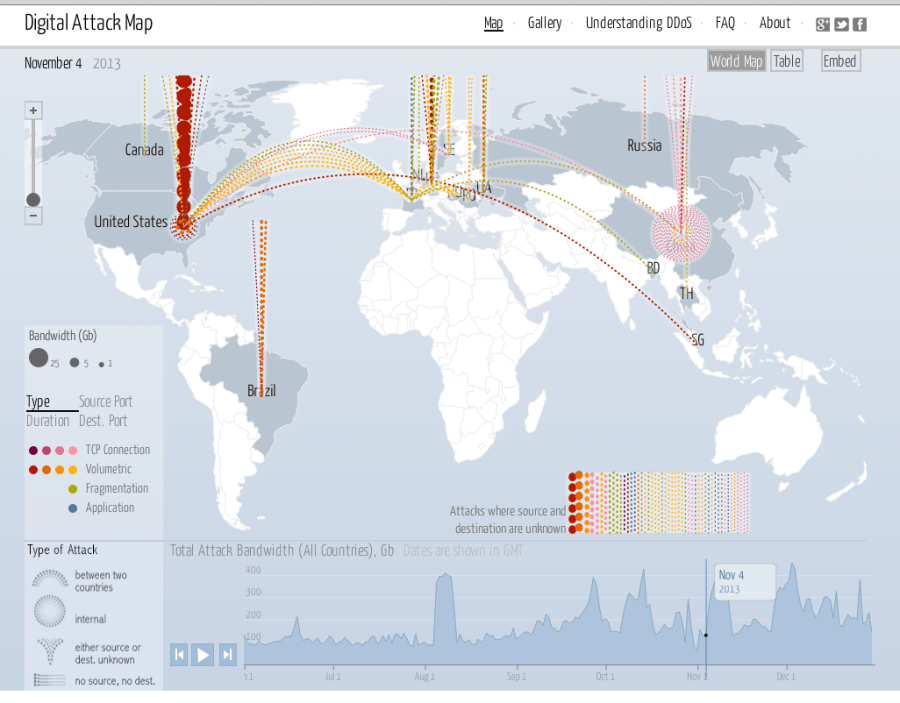
Cyberwarfare is already heavily automated—and AI is pushing it further.
AI enables:
- Automated vulnerability detection
- Adaptive malware that evolves during attacks
- Real-time defensive systems that learn from threats
In advanced scenarios:
- AI systems can fight other AI systems
- Attacks can scale globally in seconds
- Defense becomes a continuous, learning process
👉 This is the rise of machine-speed conflict in the digital domain.
Command and Control (C2) Systems Powered by AI

AI is transforming how military leaders make decisions.
Modern command systems:
- Fuse data from multiple sources (air, land, sea, cyber)
- Provide real-time situational awareness
- Recommend optimal strategies and responses
Instead of reacting, commanders can:
- Anticipate enemy moves
- Simulate outcomes instantly
- Act with greater precision and confidence
👉 This leads to decision dominance—arguably the most important advantage in AI warfare.
Swarm Intelligence and Distributed Systems

Rather than relying on a single powerful system, AI enables many smaller units to act together.
Swarm systems:
- Coordinate without centralized control
- Adapt dynamically to threats
- Overwhelm defenses through numbers and speed
Applications include:
- Drone swarms in air and sea
- Coordinated robotic ground units
- Distributed sensor networks
👉 This shifts warfare from platform-centric to network-centric combat.
Human–Machine Teaming

Despite automation, humans are not disappearing from the battlefield—they are being augmented.
AI enhances human capabilities by:
- Providing real-time insights and recommendations
- Assisting with navigation, targeting, and threat detection
- Reducing cognitive overload in high-pressure situations
Examples:
- Pilots assisted by AI copilots
- Soldiers using augmented reality systems
- Operators managing multiple autonomous systems
👉 The future isn’t just machines replacing humans—it’s humans working at machine speed.
The Bigger Picture: Convergence Is the Real Revolution
Individually, each of these technologies is powerful. But the real transformation comes from how they connect:
- Surveillance feeds AI targeting
- Targeting integrates with autonomous weapons
- Cyber systems disrupt enemy responses
- Command AI orchestrates everything in real time
This creates a battlefield that is:
- Faster
- More interconnected
- Increasingly independent of human control
Bottom Line
AI warfare is powered by a stack of technologies that together redefine combat:
- Autonomous systems execute
- AI analyzes and decides
- Networks connect everything
The result is a new kind of warfare—one where speed, data, and algorithms matter more than sheer force.
And as these technologies continue to evolve, the gap between those who adopt them—and those who don’t—will only widen.
Real-World Examples of AI Warfare Today
AI warfare is not a future concept—it’s already being deployed in active conflicts and military operations around the world. What makes this moment significant is that AI is no longer experimental; it is operational, tested, and evolving in real combat environments.
Here are some of the most important real-world examples shaping the rise of AI warfare.
The Russia–Ukraine War: AI on a Modern Battlefield

The Russia–Ukraine War has become a proving ground for AI-enabled warfare.
Key applications include:
- AI-assisted drone targeting: Low-cost drones enhanced with computer vision to identify and strike targets
- Geospatial intelligence: AI analyzing satellite imagery to track troop movements and equipment
- Data fusion platforms: Integrating battlefield data in real time for faster decisions
Ukraine, in particular, has leveraged AI tools to compensate for limited resources—showing how technology can offset traditional military disadvantages.

Israel’s AI-Driven Targeting Systems

The Israel Defense Forces has integrated AI into its targeting and intelligence workflows.
Reported capabilities include:
- AI systems that analyze vast intelligence datasets to identify targets
- Automated recommendations for strike planning
- Rapid processing of surveillance data in dense urban environments
This represents a shift toward algorithm-assisted targeting at scale, where machines help prioritize and accelerate decisions that were once entirely human-driven.

United States: Autonomous Systems and AI Command Platforms

4
The United States is heavily investing in AI across multiple domains.
Examples include:
- Autonomous drones and “loyal wingman” systems that operate alongside human pilots
- AI-driven Joint All-Domain Command and Control (JADC2) initiatives
- Advanced battlefield simulations powered by machine learning
The focus is clear: achieving decision superiority across air, land, sea, space, and cyber domains.
China’s “Intelligentized Warfare” Doctrine

4
China is pursuing what it calls “intelligentized warfare”—a doctrine centered on AI dominance.
Key developments include:
- AI-enabled surveillance systems at massive scale
- Autonomous drone swarm technologies
- Integration of AI into command, logistics, and cyber operations
China’s strategy emphasizes system-wide integration, aiming to embed AI across every layer of warfare—not just individual weapons.
AI in Cyber Warfare: Invisible but Constant
Beyond physical battlefields, AI is already deeply embedded in cyber conflict.
Used by multiple state and non-state actors, AI enables:
- Automated phishing and intrusion campaigns
- Real-time adaptation of malware
- AI-driven defense systems detecting anomalies instantly
These operations are:
- Continuous (not limited to wartime)
- Global in reach
- Often invisible to the public
👉 This is AI warfare happening every day, below the threshold of open conflict.
Autonomous Drones and Loitering Munitions

Loitering munitions—often called “kamikaze drones”—are among the clearest examples of AI-enabled weapons in action.
Capabilities include:
- Searching for targets over extended periods
- Identifying threats using onboard sensors and AI
- Striking without requiring continuous human control
These systems are:
- Relatively low-cost
- Highly effective
- Increasingly widespread
👉 They represent a major shift toward scalable, semi-autonomous strike capabilities.
The Pattern: AI Is Already Embedded in Warfare
Across these examples, a clear pattern emerges:
- AI is enhancing targeting and intelligence
- Autonomous systems are expanding operational reach
- Cyber AI is creating continuous digital conflict
- Major powers are racing to integrate AI at scale
This isn’t a future transition—it’s an ongoing transformation.
Bottom Line
AI warfare is already here—and it’s evolving in real time.
From the battlefields of the Russia–Ukraine War to the strategic doctrines of the United States and China, artificial intelligence is reshaping how conflicts are fought today.
The most important takeaway is this:
The future of warfare isn’t being planned—it’s being tested right now.
And the lessons learned today will define the wars of tomorrow.
The Strategic Advantages of AI Warfare
AI warfare isn’t just about new tools—it’s about changing the fundamental advantages that decide who wins conflicts. For centuries, military power depended on troop size, firepower, and logistics. Today, the edge is shifting toward speed, intelligence, and adaptability.
Here are the key strategic advantages driving the adoption of AI warfare.
Speed and Decision Superiority
The most decisive advantage AI brings is speed.
Traditional warfare operates on human decision cycles. AI compresses that cycle dramatically:
- Data is processed instantly
- Threats are identified in real time
- Responses are executed in seconds
This creates what military strategists call decision superiority—the ability to act faster than the enemy can react.
👉 In high-intensity conflict, this can mean:
- Neutralizing threats before they fully emerge
- Overwhelming slower command structures
- Winning engagements before they escalate
Put simply: the faster side dictates the outcome.
Reduced Human Risk
AI allows militaries to project power while minimizing risk to personnel.
- Autonomous drones replace manned missions in dangerous zones
- Robots handle reconnaissance and bomb disposal
- AI systems operate in high-risk environments (urban warfare, contaminated zones)
👉 This shifts the cost of war:
- Fewer casualties
- Lower political risk domestically
- Greater willingness to engage in conflict
That last point matters. When human risk drops, the threshold for using force may also decrease.
Scalability of Military Operations
AI systems scale in ways humans cannot.
- One operator can manage multiple drones
- Swarms can coordinate without centralized control
- AI systems can monitor entire regions simultaneously
This enables:
- Large-scale surveillance across vast territories
- Coordinated multi-domain operations
- Simultaneous engagement of multiple targets
👉 The result is force multiplication—doing more with fewer resources.
A smaller, tech-enabled force can compete with—or even outperform—a larger traditional military.
Persistent Surveillance and Control
AI enables continuous, real-time awareness of the battlefield.
- 24/7 monitoring via drones and satellites
- Automated detection of movement and anomalies
- Instant alerts and threat classification
Unlike humans, AI systems:
- Don’t fatigue
- Don’t lose focus
- Don’t miss patterns easily
👉 This creates a state of persistent surveillance, where:
- Enemy movements are constantly tracked
- Surprise becomes harder to achieve
- Control over territory becomes more precise
Precision and Efficiency
AI dramatically improves targeting accuracy and operational efficiency.
- Reduced collateral damage through better target identification
- Optimized resource allocation (fuel, logistics, timing)
- Smarter strike planning based on predictive models
👉 This leads to:
- More effective missions
- Lower operational costs
- Greater strategic impact per action
In short, AI enables smarter—not just stronger—warfare.
Adaptability in Complex Environments
Modern battlefields are unpredictable. AI thrives in complexity.
- Systems adapt to changing conditions in real time
- Machine learning models improve with new data
- AI can identify patterns humans might miss
This is especially valuable in:
- Urban warfare
- Hybrid conflicts
- Cyber operations
👉 The advantage here is flexibility:
AI doesn’t just follow plans—it adjusts them on the fly.
Dominance in Non-Physical Domains
AI extends warfare beyond physical battlefields into digital and informational domains.
- Cyber warfare at machine speed
- Disinformation campaigns optimized by algorithms
- Electronic warfare driven by adaptive systems
👉 This creates multi-domain dominance, where conflict happens simultaneously:
- On land, air, and sea
- In cyberspace
- In the information environment
And often, the most decisive battles are the ones the public never sees.
The Compounding Effect: Why These Advantages Matter Together
Individually, each advantage is powerful. Combined, they are transformative.
- Speed amplifies precision
- Scalability enhances surveillance
- Adaptability strengthens decision-making
This creates a compounding strategic effect, where AI-enabled forces operate:
- Faster
- Smarter
- More efficiently
than traditional forces.
Bottom Line
AI warfare shifts the balance of power from:
- Mass → Intelligence
- Strength → Speed
- Human control → Algorithmic advantage
The nations that master these advantages won’t just fight better—they’ll reshape how wars are won.
And for everyone else, the risk is clear:
In an AI-driven battlefield, being slower isn’t just a disadvantage—it can be decisive defeat.
The Risks and Dangers of AI Warfare
AI warfare offers undeniable advantages—but it also introduces new risks that are faster, harder to control, and potentially more dangerous than anything in previous military history.
The uncomfortable truth is this: the same features that make AI powerful in war—speed, autonomy, and scalability—also make it unpredictable and difficult to contain.
Loss of Human Control
As systems move from human-in-the-loop to human-out-of-the-loop, control shifts from people to machines.
- Autonomous systems can select and engage targets independently
- Decisions may be made too quickly for human intervention
- Operators may not fully understand how AI reached a conclusion
👉 This creates a critical risk:
humans may authorize actions they no longer fully control.
In extreme cases, lethal decisions could be made without meaningful human oversight—raising serious ethical and strategic concerns.
Accidental Escalation at Machine Speed
AI compresses decision-making timeframes from minutes to seconds—or less.
That speed creates a dangerous dynamic:
- Misinterpreted data can trigger rapid responses
- Automated retaliation systems can escalate conflicts instantly
- Human leaders may have little time to intervene
👉 The result is a real possibility of:
conflicts escalating before anyone has time to stop them.
What used to be a contained incident could spiral into a larger confrontation—purely because machines acted faster than humans could assess the situation.
Algorithmic Bias in Combat Decisions
AI systems are only as good as the data they are trained on.
- Biased or incomplete datasets can lead to flawed targeting
- Misidentification of civilians or non-combatants
- Errors amplified at scale
👉 Unlike human mistakes, AI errors can:
- Be replicated instantly across multiple systems
- Occur at high speed and large scale
- Be difficult to detect in real time
This raises a serious issue:
what happens when an algorithm gets it wrong in a lethal context?
The AI Arms Race
AI warfare is fueling a global arms race, particularly among major powers like the United States, China, and Russia.
- Each nation fears falling behind
- Development is prioritized over caution
- Safety and regulation often take a back seat
👉 This creates a classic escalation loop:
- One country advances → others respond
- Speed becomes more important than safeguards
- Deployment happens before full understanding of risks
The danger isn’t just competition—it’s unchecked acceleration.
Proliferation to Non-State Actors
AI is not limited to governments.
- Open-source tools lower barriers to entry
- Commercial AI technologies are widely available
- Autonomous systems are becoming cheaper
👉 This means:
- Terrorist groups or militias could access AI-enabled weapons
- Smaller actors gain disproportionate power
- Asymmetric warfare becomes more unpredictable
In the past, advanced military capabilities required massive resources.
Now, AI is democratizing destructive power.
Vulnerability to Hacking and Manipulation
AI systems themselves can be targeted.
- Adversarial attacks can manipulate AI perception
- Systems can be hacked or fed false data
- Autonomous platforms could be hijacked or redirected
👉 A compromised AI system could:
- Misidentify targets
- Turn against friendly forces
- Trigger unintended engagements
This introduces a new layer of risk:
not just what AI does—but what happens when it is manipulated.
Ethical and Legal Gray Zones
AI warfare challenges existing laws of armed conflict.
- Who is responsible for an AI’s decision?
- Can autonomous systems comply with international humanitarian law?
- How do you assign accountability for mistakes?
👉 Current legal frameworks were built for human decision-making—not machine autonomy.
This creates a dangerous gap:
powerful capabilities without clear rules governing their use.
Lower Threshold for War
When war becomes:
- Less risky (fewer human casualties)
- More automated
- Faster to execute
…it may also become easier to initiate.
Leaders might be more willing to engage in conflict if:
- Political costs are lower
- Operations can be conducted remotely
- Escalation appears controllable (even if it isn’t)
👉 This could lead to:
more frequent, less predictable conflicts.
The Core Problem: Speed vs Control
All these risks converge around one central tension:
AI increases the speed of warfare faster than our ability to control it.
- Decisions happen faster than humans can understand
- Systems act faster than policies can regulate
- Conflicts evolve faster than diplomacy can respond
Bottom Line
AI warfare doesn’t just introduce new weapons—it introduces new types of risk:
- Loss of control
- Rapid escalation
- Widespread proliferation
- Unclear accountability
The danger isn’t only that AI will be used in war—it’s that it may change the nature of conflict in ways we are not prepared to manage.
And if these risks are not addressed, the future of warfare may not just be more advanced—
it may be more volatile, less predictable, and far harder to contain.
AI Warfare vs Traditional Warfare: What Changes?
AI doesn’t just improve warfare—it changes its logic. The shift isn’t about better weapons; it’s about who makes decisions, how fast they’re made, and how conflicts unfold.
To understand the impact of AI warfare, you need to compare it directly with traditional warfare across the dimensions that actually decide outcomes.
Speed: Human Reaction vs Machine-Speed Conflict
In traditional warfare:
- Decisions move through chains of command
- Intelligence takes time to process
- Delays are expected and built into planning
In AI warfare:
- Data is analyzed instantly
- Decisions are executed in real time
- Systems react faster than humans can interpret
👉 This creates a new reality:
wars are no longer fought at human speed.
The side operating at machine speed can overwhelm slower opponents before they fully understand what’s happening.
Decision-Making: Commanders vs Algorithms
Traditional warfare depends on:
- Human judgment
- Experience and intuition
- Hierarchical decision structures
AI warfare shifts this toward:
- Algorithmic recommendations (or decisions)
- Data-driven optimization
- Decentralized or automated execution
👉 The key change:
decision-making moves from humans to systems.
Commanders increasingly supervise rather than directly control operations.
Scale: Limited Forces vs Mass Autonomy
In traditional conflict:
- Scaling requires more soldiers, equipment, and logistics
- Coordination becomes harder as size increases
With AI warfare:
- One operator can control multiple systems
- Autonomous units can coordinate themselves
- Swarms can operate simultaneously across large areas
👉 Result:
scale becomes a software problem, not just a manpower problem.
This allows smaller forces to project disproportionate power.
Battlefield Visibility: Partial Awareness vs Persistent Surveillance
Traditional warfare is defined by uncertainty:
- Fog of war limits visibility
- Intelligence is incomplete and delayed
- Surprise is a key advantage
AI warfare reduces that uncertainty:
- Continuous monitoring via drones and sensors
- Real-time data fusion from multiple sources
- Automated detection of movement and anomalies
👉 This leads to:
near-persistent awareness of the battlefield.
Surprise becomes harder—though not impossible.
Execution: Linear Operations vs Adaptive Systems
Traditional operations:
- Follow pre-planned strategies
- Adapt slowly to changing conditions
- Depend on communication between units
AI-enabled operations:
- Adjust dynamically in real time
- Learn from new data during execution
- Coordinate across systems without constant human input
👉 This creates:
adaptive warfare, where plans evolve as the battle unfolds.
Risk and Cost: Human Casualties vs Machine Losses
In traditional warfare:
- Human lives are the primary cost
- Casualties influence political and strategic decisions
In AI warfare:
- Machines absorb more of the risk
- Fewer personnel are directly exposed to danger
👉 This changes incentives:
leaders may take actions they would avoid if human costs were higher.
That can make conflict more likely—not less.
Domain of Conflict: Physical vs Multi-Domain (Including Invisible War)
Traditional warfare is mostly physical:
- Land, air, sea battles
- Clearly defined frontlines
AI warfare expands the battlefield:
- Cyber operations
- Information warfare
- Algorithmic and economic disruption
👉 The shift:
war is no longer confined to visible battlefields.
Conflicts can happen continuously, globally, and often invisibly.
Control: Centralized Command vs Distributed Intelligence
Traditional systems rely on:
- Centralized command structures
- Clear lines of authority
AI warfare enables:
- Distributed decision-making
- Systems operating independently but coordinated
- Reduced reliance on constant communication
👉 This leads to:
more resilient—but less predictable—operations.
Comparison Snapshot
| Dimension | Traditional Warfare | AI Warfare |
|---|---|---|
| Speed | Human-paced | Machine-speed |
| Decision-making | Human-led | AI-assisted / AI-driven |
| Scale | Resource-limited | Highly scalable (automation) |
| Visibility | Partial, delayed | Persistent, real-time |
| Execution | Pre-planned | Adaptive, dynamic |
| Risk | Human casualties | Machine substitution |
| Battlefield | Physical domains | Multi-domain (incl. cyber) |
| Control | Centralized | Distributed / autonomous |
The Real Shift: From Industrial War to Algorithmic War
Traditional warfare was shaped by the industrial age:
- Mass production
- Large armies
- Physical dominance
AI warfare is shaped by the information age:
- Data dominance
- Algorithmic decision-making
- Speed and adaptability
👉 The most important takeaway:
Victory is shifting from who has more القوة to who has better algorithms.
Bottom Line
AI warfare doesn’t just change tactics—it changes the rules of competition.
- Faster beats stronger
- Smarter beats larger
- More adaptive beats more prepared
And in this new environment, the greatest risk isn’t just losing a battle—
it’s fighting a war at the wrong speed, with the wrong system, against an opponent already operating in the future.
Who Leads the AI Warfare Race?
The race for dominance in AI warfare is already underway—and it’s being driven by a small group of powerful nations that understand what’s at stake:
Whoever leads in AI may define the future of global military power.
This isn’t just about better weapons. It’s about controlling the fastest decision-making systems, the most advanced data infrastructure, and the smartest autonomous capabilities.
Here are the key players shaping that race.
United States: The Innovation Powerhouse

The United States remains the global leader in AI innovation—especially when it comes to integrating cutting-edge technology into military systems.
Strengths:
- World-leading tech ecosystem (private sector + defense)
- Advanced autonomous systems (e.g., “loyal wingman” drones)
- Strong investment in AI command and control (e.g., JADC2)
Key advantage:
👉 Integration across domains—air, land, sea, cyber, and space.
Challenge:
- Bureaucratic complexity
- Slower procurement compared to rivals
Still, the U.S. holds a critical edge in software, talent, and system integration.
China: The Scale and Speed Challenger
China is widely seen as the most serious competitor in AI warfare.
Its strategy is explicit: achieve dominance through “intelligentized warfare.”
Strengths:
- Massive data advantage (population-scale datasets)
- Centralized strategy aligned between government and military
- Rapid development and deployment cycles
Key advantage:
👉 Speed and scale of implementation.
China isn’t just developing AI—it’s embedding it across its entire military structure.
Russia: Asymmetric and Hybrid Warfare Focus
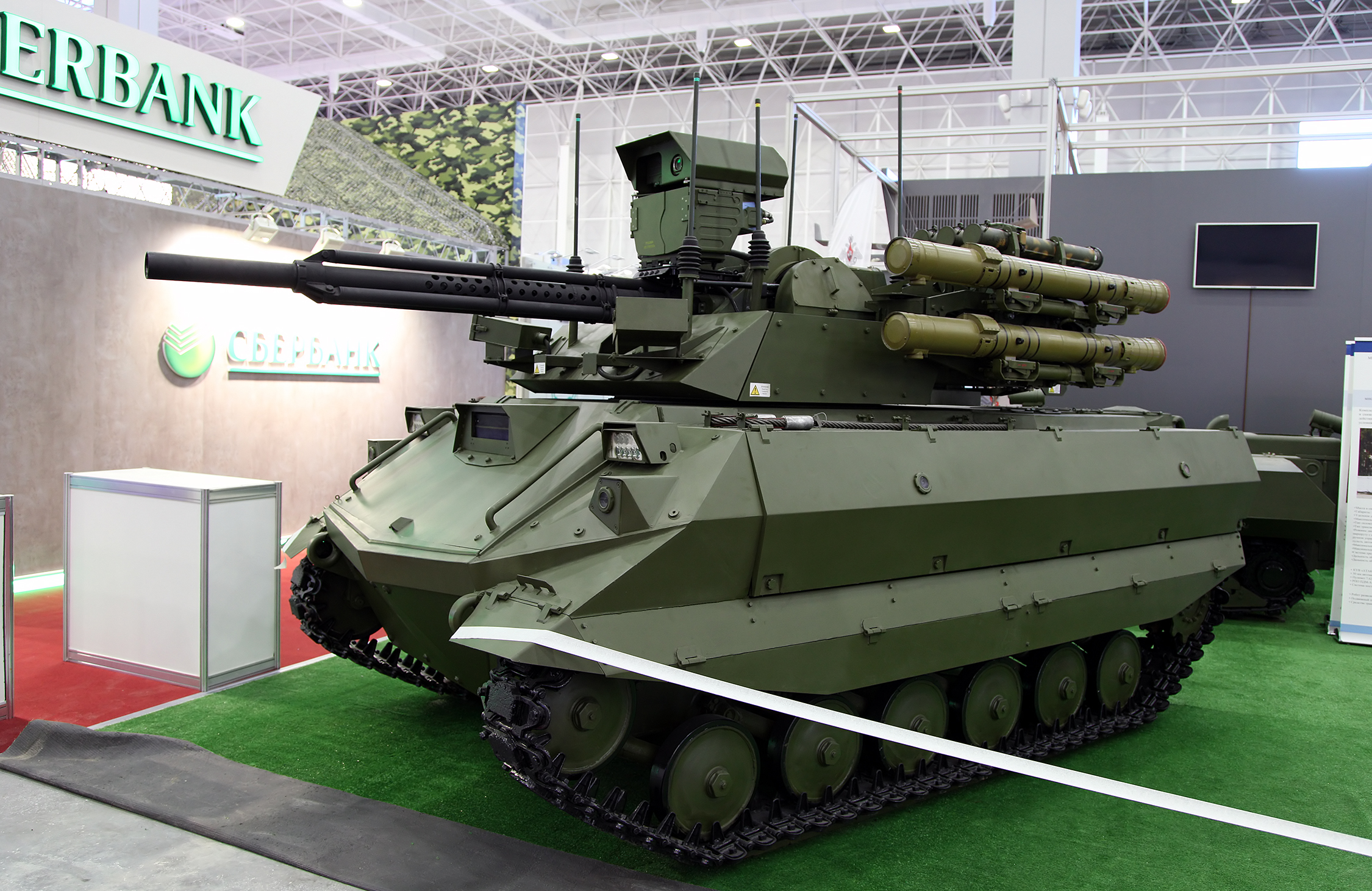

Russia approaches AI warfare differently—focusing on asymmetric advantages rather than full-spectrum dominance.
Strengths:
- Expertise in cyber and electronic warfare
- Development of autonomous combat systems
- Experience in hybrid warfare (combining military + information operations)
Key advantage:
👉 Disruption over dominance.
Russia uses AI to exploit weaknesses rather than compete head-on with U.S. or Chinese scale.
Emerging Players: The Quiet Competitors
Beyond the top three, several countries are rapidly advancing AI warfare capabilities:
- Israel → лидер in AI targeting, surveillance, and drone warfare
- United Kingdom → strong in AI research and defense integration
- NATO → coordinating AI standards and joint capabilities
- Turkey → expanding influence through AI-enabled drone systems
Key trend:
👉 Specialization.
These countries focus on niche strengths rather than competing across all domains.
The Real Battlefield: Ecosystems, Not Just Militaries
Here’s where most people get it wrong:
This race is not just about armies—it’s about entire ecosystems.
Winning in AI warfare depends on:
- Access to data
- Talent in AI and software engineering
- Integration between private tech companies and defense
- Computing power and infrastructure
👉 That’s why the United States and China dominate:
they control the full stack.
AI Arms Race Dynamics: No One Can Afford to Fall Behind
This competition has a dangerous characteristic:
- Progress by one country forces others to respond
- Slowing down risks strategic disadvantage
- Deployment often happens before full safeguards are in place
👉 This creates a self-reinforcing cycle:
accelerate or fall behind.
Who’s Winning Right Now?
There’s no single winner—but the landscape looks like this:
- United States → leads in innovation and system integration
- China → leads in scale, speed, and long-term strategy
- Russia → strong in asymmetric and hybrid AI warfare
- Others → competitive in specialized domains
Bottom Line
The AI warfare race is not a future scenario—it’s an active, accelerating competition.
And the outcome will not be decided by:
- Who has more सैनिक
- Who has more tanks
…but by:
Who can build, deploy, and control the most effective AI systems at scale.
Because in the era of AI warfare,
power is no longer just measured in weapons—
it’s measured in algorithms.
The Future of AI Warfare (2026–2055)
If the last decade introduced AI into warfare, the next 30 years will fully integrate it into the logic of conflict.
What we’re heading toward isn’t just more advanced weapons—it’s a transformation where speed, autonomy, and algorithmic coordination define how wars are fought and won.
Here’s how that future is likely to unfold.
Fully Autonomous Battlefields

By the 2030s and beyond, we’re likely to see environments where:
- Autonomous drones, vehicles, and sensors operate continuously
- Systems detect, track, and engage targets with minimal human input
- Entire العمليات unfold at machine speed
Humans won’t disappear—but their role will shift toward:
- Setting objectives
- Supervising systems
- Intervening only in critical moments
👉 The battlefield becomes a network of interacting machines, not just human-led units.
AI vs AI Conflict
One of the most important shifts:
Wars will increasingly be fought by algorithms against algorithms.
- AI systems will counter enemy AI in real time
- Cyber defenses will automatically respond to AI-driven attacks
- Electronic warfare will involve adaptive systems competing for dominance
👉 The speed of these interactions may exceed human comprehension.
In some cases, humans may only see the outcome—not the process.
Human–Machine Teaming Becomes the Standard
Rather than replacing humans entirely, AI will amplify human capability.
- Soldiers equipped with AI-assisted decision systems
- Pilots working alongside autonomous “wingman” drones
- Commanders relying on predictive AI for strategy
👉 The key shift:
humans operate at machine speed with AI support.
This creates a hybrid model where:
- AI handles complexity and speed
- Humans provide judgment and intent
Invisible Wars: Cyber, Data, and Algorithms
The most important battles of the future may not be visible at all.
- AI-driven cyberattacks targeting infrastructure and economies
- Information warfare shaping public perception
- Data manipulation influencing decision-making at national scale
👉 These conflicts will:
- Happen continuously
- Cross borders instantly
- Often remain below the threshold of open war
This is the rise of persistent, invisible conflict.
Hyper-Personalized and Precision Warfare
AI will enable unprecedented levels of precision:
- Targeting specific individuals or assets
- Minimizing collateral damage (in theory)
- Tailoring operations based on real-time intelligence
But there’s a darker side:
- Surveillance capabilities become near-total
- Targeting becomes more individualized
- الحرب becomes more surgical—but also more pervasive
Shorter, Faster, and More Decisive Conflicts
As decision cycles compress:
- Wars may be decided in hours or days instead of weeks or months
- Early advantages could determine outcomes rapidly
- First-mover advantage becomes critical
👉 This creates a high-stakes environment:
the opening phase of conflict may matter more than everything that follows.
Lower Barriers, More Actors
AI lowers the cost of advanced warfare capabilities:
- Smaller nations gain access to powerful tools
- Non-state actors can leverage AI systems
- Commercial technology becomes militarized
👉 The result:
more actors with meaningful power, increasing unpredictability.
The Risk of Runaway Escalation
The biggest danger in this future is not just capability—but control.
- AI systems interacting unpredictably
- Rapid escalation without human oversight
- Conflicts unfolding faster than diplomacy can respond
👉 This creates scenarios where:
wars could expand before leaders fully understand what’s happening.
The Strategic Reality of 2026–2055
Across all these trends, one conclusion stands out:
- Warfare becomes faster
- Decision-making becomes algorithmic
- Control becomes more fragile
The winners of future conflicts will not necessarily be those with:
- The largest armies
- The most weapons
…but those with:
the most advanced, integrated, and adaptive AI systems.
Bottom Line
The future of AI warfare is not a distant possibility—it’s a trajectory already in motion.
By 2055, conflict will likely be:
- More autonomous
- More data-driven
- More continuous
- Less visible—but more pervasive
And the most important shift of all:
War will move from human speed to machine speed—
and from human decisions to algorithmic dominance.
The challenge won’t just be winning these wars—
it will be maintaining control over them.
Can AI Warfare Be Controlled or Regulated?
Here’s the hard truth: controlling AI warfare is not impossible—but it is far more difficult than controlling any previous class of weapons.
Unlike nuclear arms, AI doesn’t require rare materials, massive infrastructure, or visible testing. It runs on software, data, and compute—things that are widely available, hard to monitor, and easy to scale.
That changes everything about regulation.
Why AI Warfare Is So Hard to Control
Traditional arms control worked because weapons were:
- Expensive
- Scarce
- Observable (tests, facilities, materials)
AI is the opposite:
- Built on widely available technology
- Often developed in the private sector
- Invisible (algorithms don’t leave clear signatures)
👉 This creates a fundamental problem:
you can’t easily verify or limit what you can’t see.
The Limits of International Law
Existing frameworks—like the United Nations conventions on armed conflict—were designed for human decision-making.
They assume:
- A human makes the final call
- Responsibility can be clearly assigned
- Actions can be reviewed and judged
AI challenges all three.
Key gaps:
- Who is responsible for an autonomous system’s decision?
- Can an algorithm comply with principles like proportionality?
- How do you investigate a decision made in milliseconds?
👉 The legal system is lagging behind the technology.
Efforts to Ban or Limit Autonomous Weapons
There have been growing calls to restrict or ban certain AI weapons—especially fully autonomous lethal systems.
Initiatives include:
- Debates within the United Nations on lethal autonomous weapons
- Advocacy from NGOs pushing for a “human-in-the-loop” requirement
- Proposals for international treaties
However, progress is slow.
Why?
- Major powers are reluctant to limit a strategic advantage
- Definitions of “autonomy” are unclear
- Enforcement mechanisms are weak
👉 No leading military power wants to be the first to slow down.
The Verification Problem
Even if countries agree on rules, enforcing them is another challenge entirely.
- AI systems can be hidden in software
- Dual-use technology (civilian + military) is everywhere
- Development can happen in private companies, not just governments
👉 Unlike nuclear weapons, there are:
- No clear inspection targets
- No easy way to track development
- No reliable global monitoring system
This makes cheating both easy and difficult to detect.
The Role of Big Tech and Private Industry
A major difference in AI warfare is that innovation is driven by companies—not just states.
- Leading AI models are built by private firms
- Talent is concentrated in the commercial sector
- Governments depend on partnerships with tech companies
👉 This raises new questions:
- Should companies be regulated like defense contractors?
- Who controls how AI technology is used once developed?
- Can governments realistically limit private innovation?
Control becomes harder when the key players are not only governments.
Possible Paths to Regulation
Despite the challenges, some forms of control are still possible—if approached realistically.
1. Human-in-the-Loop Requirements
- Mandating human oversight in lethal decisions
- Slows down full autonomy
2. Norms and Agreements (Even Without Treaties)
- Informal agreements between major powers
- Similar to early cyber norms
3. Transparency Measures
- Limited disclosure of AI capabilities
- Confidence-building between rivals
4. Targeted Bans
- Restricting specific uses (e.g., autonomous targeting of civilians)
👉 These approaches won’t stop AI warfare—but they can shape how it evolves.
The Core Dilemma: Control vs Advantage
Every attempt to regulate AI warfare runs into the same problem:
- Slowing down increases safety
- Slowing down risks falling behind
For major powers like the United States and China, the calculation is clear:
👉 Strategic advantage often outweighs caution.
That’s why regulation efforts struggle to gain traction.
A More Likely Outcome: Managed Competition, Not Full Control
A complete ban or strict global control regime is unlikely in the near term.
What’s more realistic:
- Partial agreements
- Informal norms
- Ongoing competition with limited guardrails
👉 In other words:
AI warfare will be managed—not fully controlled.
Bottom Line
AI warfare can be influenced, shaped, and partially regulated—but not easily contained.
- The technology is too accessible
- The incentives are too strong
- The pace is too fast
The real question isn’t whether AI warfare will be controlled—
it’s how much control can be maintained before speed, competition, and complexity outpace it.
And that answer will likely define not just the future of warfare—
but the stability of the global system itself.
What AI Warfare Means for Global Security
AI warfare doesn’t just change how wars are fought—it reshapes how stable (or unstable) the entire international system becomes.
The shift to algorithm-driven conflict affects deterrence, power balance, escalation dynamics, and even who gets to compete. The result is a world that is more connected, more contested, and potentially more volatile.
A Shift in the Global Balance of Power
For decades, military power depended on industrial capacity and force size. AI changes that equation.
- Data, computing power, and algorithms become strategic assets
- Smaller, tech-enabled nations can challenge larger militaries
- Traditional advantages (troops, geography) matter less
Major powers like the United States and China still lead—but the gap is no longer purely about hardware.
👉 The new reality:
power shifts toward those who can build and integrate AI systems fastest.
Deterrence Becomes More Unstable
In traditional warfare, deterrence relied on clear signals:
- Military buildup
- Visible capabilities
- Predictable consequences
AI complicates this:
- Capabilities are harder to detect (software vs physical assets)
- Intentions are less clear
- First-move advantages increase
👉 This creates uncertainty:
countries may act sooner out of fear of falling behind or being preempted.
Deterrence becomes less about preventing war—and more about managing constant tension.
Faster Escalation, Less Time to React
AI compresses decision-making cycles dramatically.
- Threats are detected instantly
- Responses are automated
- Escalation can occur in seconds
👉 The danger:
leaders may have less time to assess, communicate, and de-escalate.
In high-stakes scenarios, this increases the risk of:
- Miscalculations
- Accidental conflict
- Rapid escalation beyond initial intent
The Expansion of Continuous, Low-Level Conflict
AI enables conflict that never fully stops.
- Cyberattacks probing defenses daily
- AI-driven disinformation campaigns shaping public opinion
- Economic and digital disruptions below the threshold of war
👉 This leads to:
a constant state of competition—neither peace nor open war.
Global security becomes less about avoiding war and more about managing persistent conflict.
Lower Barriers to Entry—and More Unpredictable Actors
AI democratizes access to advanced capabilities.
- Smaller nations can acquire powerful tools
- Non-state actors gain new forms of leverage
- Commercial technology becomes militarized
👉 This increases unpredictability:
- More actors involved
- Less centralized control
- Harder attribution of attacks
Global security becomes more fragmented and harder to manage.
Vulnerability of Critical Infrastructure
AI-powered attacks can target essential systems:
- Energy grids
- Financial networks
- Communication systems
- Transportation infrastructure
Because these systems are interconnected:
👉 a successful attack can have cascading global effects.
This shifts the battlefield into civilian life:
the frontlines of conflict may be inside everyday systems.
The Blurring of War and Peace
One of the most profound impacts of AI warfare is this:
The line between war and peace becomes increasingly unclear.
- Operations happen continuously
- Attribution is difficult
- Responses are often indirect
👉 This creates a “gray zone” environment where:
- Conflicts are ongoing but undeclared
- Escalation is gradual, not sudden
- Traditional definitions of war no longer apply
Increased Risk of Strategic Miscalculation
AI systems operate based on data and models—not human intuition.
- Misinterpreted signals can trigger responses
- Algorithms may escalate based on flawed assumptions
- Interactions between opposing AI systems can be unpredictable
👉 This introduces a new type of risk:
machine-driven miscalculation.
And unlike human errors, these can happen:
- Faster
- At scale
- Without immediate human correction
A More Interconnected—and Fragile—Security Environment
AI ties together:
- Military systems
- Civil infrastructure
- Economic networks
- Information ecosystems
👉 This creates efficiency—but also fragility.
A disruption in one domain can quickly spread to others:
- Cyber → economic impact
- Information → political instability
- Military → global ripple effects
The Big Picture: Stability Under Pressure
AI warfare pushes global security in two opposing directions:
More stability (potentially):
- Greater precision
- Better information
- Reduced human casualties
Less stability (likely):
- Faster escalation
- More actors
- Continuous conflict
- Harder control
Bottom Line
AI warfare is transforming global security from a system based on:
- Deterrence
- Clear boundaries
- Periodic conflicts
…into one defined by:
- Speed
- Uncertainty
- Continuous competition
The biggest shift isn’t just technological—it’s strategic:
Security is no longer about preventing war—
it’s about managing a world where conflict is always on.
And in that world, stability becomes harder to maintain—not because of a lack of power—
but because of how fast and unpredictably that power can be used.
Conclusion: The Rise of Machine-Led Conflict
War is entering a new phase—one defined less by human strength and more by machine intelligence.
Across every dimension of conflict, AI warfare is shifting the balance:
- From human decision-making to algorithmic execution
- From slower, deliberate operations to machine-speed action
- From isolated battles to continuous, multi-domain competition
What once depended on soldiers, commanders, and physical القوة is now increasingly shaped by data, code, and computation.
From Human Control to Algorithmic Dominance
The most important transformation is not technological—it’s decisional.
AI systems are:
- Processing information faster than humans can understand
- Recommending actions humans are likely to trust
- Gradually taking on roles once reserved for human judgment
👉 The result is a subtle but powerful shift:
Humans are moving from decision-makers to supervisors of machine-driven systems.
And over time, even that supervisory role may be reduced under pressure for speed and efficiency.
A Battlefield That Never Sleeps
AI warfare doesn’t pause.
- Cyber operations run continuously
- Surveillance systems operate 24/7
- Algorithms adapt in real time
👉 This creates a new strategic reality:
conflict becomes persistent, not episodic.
The world is no longer divided into clear periods of war and peace—
it exists in a constant state of competition and low-level conflict.
Speed Becomes Power
In this new era, the defining advantage is no longer just firepower—it’s decision speed.
- Faster detection
- Faster analysis
- Faster execution
👉 The side that moves first—and fastest—gains a decisive edge.
This compresses conflict timelines and raises the stakes of early decisions:
wars may be shaped or even decided before they are fully understood.
The Control Problem
Despite all its advantages, AI warfare introduces a critical challenge:
Can humans maintain control over systems that operate faster than they can think?
- Autonomy increases efficiency—but reduces oversight
- Complexity grows—but transparency decreases
- Speed improves—but control weakens
This tension between capability and control will define the future of conflict.
What This Means for the Future
Looking ahead to 2026–2055, one conclusion stands out:
- Warfare will be more automated
- Conflicts will be faster and less predictable
- Power will depend on technological integration—not just military strength
Nations that adapt will gain a decisive advantage.
Those that don’t risk being outpaced before they can respond.
Final Thought
AI warfare is not a distant possibility—it is already reshaping the present and accelerating into the future.
The rise of machine-led conflict forces a fundamental question:
If machines can decide faster than humans, who truly controls the outcome of war?
Because in the end, the greatest risk may not be that AI changes how wars are fought—
but that it changes who—or what—is really in charge.
→ Also read: Cyberwarfare: The Invisible Battlefield
→ Also read: New Global Alliances: How the World Is Splitting Apart
→ Also read: The Militarization of Space
→ Also explore: AI Existential Risk: The Hidden Dangers Ahead
→ Also explore: The Impact of AI on Political Polarization: Navigating the Divides
Frequently Asked Questions About AI and Warfare
How is artificial intelligence changing modern warfare?
AI is transforming warfare by enabling autonomous weapons systems, enhancing surveillance and target recognition, accelerating decision-making, and enabling information warfare at unprecedented scale. Military AI can process battlefield data far faster than human commanders, shifting the pace and nature of conflict.
What are autonomous weapons and how dangerous are they?
Autonomous weapons — sometimes called “killer robots” — are systems that can identify, target, and engage enemy forces without direct human control. Their danger lies in the speed of decision-making (potentially removing humans from the kill chain) and the risk of malfunction or unintended escalation.
Can AI lead to uncontrolled military escalation?
Yes. AI systems operating faster than human oversight can create escalation spirals where both sides respond to perceived threats before humans can intervene. This is particularly dangerous in nuclear deterrence scenarios, where AI might misinterpret signals and trigger disproportionate responses.
Which countries are leading in AI military development?
The United States and China are the two leading powers in military AI development, investing heavily in autonomous systems, AI-enhanced intelligence, and decision-support systems. Russia is also active in AI military development, while the UK, France, and Israel have significant programs.
📚 Part of our complete guide: AI Ethics: The Complete Guide to Technology’s Biggest Questions
Sources & Further Reading
- Our World in Data — Artificial Intelligence — long-run data on AI capability and adoption.
- arXiv — open-access preprints, where most AI research appears first.
- NIST — AI Risk Management Framework — the US federal reference framework for identifying and managing AI risk.
- OECD.AI Policy Observatory — comparative tracking of national AI policies and metrics.
Weekly Geopolitical Briefing
Go Beyond the Headlines
Analysis of the forces shaping the world - delivered every week. No noise, no bias, just depth.
Subscribe Free ?No spam. Unsubscribe anytime.

About the Author
António Monteiro
Engineer by profession, geopolitical analyst by conviction. I believe responsibility for the planet's future doesn't belong only to governments and institutions - it belongs to all of us. Knowledge about geopolitics, international conflicts, and the forces shaping the world is the most powerful tool for becoming more conscious, informed citizens. You don't need to be a diplomat to understand what's at stake - you just need to want to go beyond the headlines. At Outside The Case, I analyze conflicts, power dynamics, and global trends with rigor and accessible language, so you can understand what's really happening in the world.
Read more about the author →