
War will not begin with missiles or marching armies—it will start with silence. Power grids will fail without warning. Financial systems will freeze in seconds. Entire cities may go dark, not from bombs, but from lines of code written thousands of miles away. This is the reality of the cyberwarfare future—a battlefield that is invisible, continuous, and already active. Nations are no longer preparing for cyber conflict; they are engaged in it right now, probing defenses, planting backdoors, and testing the limits of disruption without triggering open war. In this new era, the most decisive attacks won’t be seen on radar or reported in real time—they will be felt in everyday life, where the digital systems we depend on become the primary targets of global power struggles.
H2: What Is Cyberwarfare and Why It Defines the Future of Conflict
SEO intent: definition + context
- Clear definition (state vs non-state actors)
- Difference between cybercrime, cyber espionage, cyberwarfare
- Why it’s central to future wars (low cost, high impact, deniability)
👉 Include keyword variations:
- future of cyberwarfare
- cyberwarfare in future conflicts
A global overview of: The Next 30 Years of Global Conflict: Predictions for 2026–2055
Why Cyberwarfare Will Dominate Future Global Conflicts (2026–2055)
Cyberwarfare isn’t just another domain of conflict—it’s becoming the default mode of competition between nations. Between 2026 and 2055, wars will be less about territorial conquest and more about system disruption, data control, and strategic paralysis. The shift is already underway, and the logic behind it is hard to ignore.
Low Cost, High Impact Warfare
Traditional warfare is expensive, slow, and politically risky. Cyberwarfare flips that equation.
A relatively small, highly skilled team can:
- Disrupt national infrastructure
- Steal strategic intelligence
- Cripple financial systems
—all without deploying a single soldier.
This creates a dangerous reality: weaker nations can now challenge stronger ones asymmetrically. You don’t need an aircraft carrier when you can shut down one. The barrier to entry is lower, but the potential damage is enormous.

Plausible Deniability and the Attribution Problem
In conventional war, identifying the attacker is straightforward. In cyberwarfare, it’s murky by design.
Attacks are routed through multiple countries, masked by proxies, or executed via third-party groups. Even when governments strongly suspect the source, proving it publicly is difficult.
This creates a strategic gray zone where:
- Nations can attack without immediate retaliation
- Conflicts remain below the threshold of declared war
- Escalation becomes unpredictable
In the cyberwarfare future, conflict doesn’t need acknowledgment to be real.
Always-On Conflict: The End of Peace Time
Cyberwarfare eliminates the clear boundary between war and peace.
Instead of defined conflicts, we now see:
- Continuous probing of networks
- Persistent espionage campaigns
- Regular disruption attempts
This is permanent, low-intensity warfare—happening 24/7.
From 2026 onward, nations will operate under the assumption that:
They are always under attack, even in peacetime.
This constant pressure forces governments to invest heavily in cyber defense while simultaneously developing offensive capabilities.
Critical Infrastructure as the Primary Target
Future conflicts will focus less on military bases and more on civilian systems that keep societies running.
Key targets include:
- Energy grids
- Water supply systems
- Telecommunications networks
- Financial infrastructure
The goal is not just destruction—it’s disruption and psychological impact. Turning off a city’s power for 48 hours can create more chaos than a limited military strike.
This makes cyberwarfare uniquely powerful:
it directly affects populations, not just armies.
Speed, Scale, and Automation
Cyberattacks happen at machine speed.
With the integration of AI:
- Vulnerabilities can be discovered automatically
- Attacks can adapt in real time
- Defenses can be overwhelmed instantly
This compresses decision-making windows from days to seconds.
In future conflicts, leaders may have minutes—or less—to respond to attacks that could cripple entire sectors of their economy.
No Borders, No Frontlines
Cyberwarfare ignores geography.
An attack launched from one continent can impact another instantly. There are:
- No frontlines
- No safe zones
- No clear beginning or end
Every connected system becomes part of the battlefield.
This fundamentally changes military strategy. Defense is no longer about protecting territory—it’s about securing networks, data, and digital infrastructure across borders.
The Blurring of Civilian and Military Targets
In cyberwarfare, the distinction between civilian and military assets is collapsing.
Private companies operate:
- Cloud infrastructure
- Communication platforms
- Critical software systems
This means future conflicts will inevitably involve:
- Tech companies
- Financial institutions
- Even ordinary users
The battlefield expands into everyday life, making cyberwarfare deeply integrated into society itself.
Strategic Advantage Without Open War
Perhaps the most important reason cyberwarfare will dominate is this:
It allows nations to weaken adversaries without triggering full-scale war.
States can:
- Undermine economies
- Influence elections
- Disrupt supply chains
—all while avoiding the political and military costs of traditional conflict.
This makes cyberwarfare the preferred tool for long-term strategic competition.
Bottom Line
Between 2026 and 2055, cyberwarfare will dominate not because it replaces traditional war—but because it outperforms it in efficiency, deniability, and strategic impact.
The most decisive battles of the future won’t be fought on land, sea, or air.
They will be fought silently, continuously, and globally—inside the systems that modern societies depend on every day.
Key Technologies Shaping the Future of Cyberwarfare
If you want to understand the cyberwarfare future, don’t just look at who is involved—look at the technologies reshaping the battlefield. The next generation of conflict will be defined by tools that are faster, smarter, and far more autonomous than anything we’ve seen before. These technologies don’t just enhance cyberwarfare—they fundamentally transform its scale and impact.
Artificial Intelligence: The Weaponization of Speed and Intelligence
Artificial intelligence is rapidly becoming the backbone of both offensive and defensive cyber operations.
On the offensive side, AI can:
- Automatically scan systems for vulnerabilities
- Launch adaptive attacks that evolve in real time
- Mimic human behavior to bypass detection
On the defensive side, it enables:
- Real-time threat detection
- Automated response systems
- Predictive security models
The problem? AI favors speed, and speed favors the attacker. In future conflicts, cyberattacks could unfold faster than humans can respond, forcing nations to rely on autonomous defense systems—raising the risk of uncontrolled escalation.
Quantum Computing: Breaking the Foundations of Security
Modern cybersecurity relies heavily on encryption. Quantum computing threatens to break it.
Unlike classical computers, quantum machines can solve complex mathematical problems exponentially faster. This means:
- Current encryption standards could become obsolete
- Secure communications could be exposed
- Sensitive historical data could be decrypted retroactively
Nations that achieve quantum superiority will gain a massive intelligence advantage. In the cyberwarfare future, this could create a temporary but decisive imbalance of power—similar to the early days of nuclear weapons.
Internet of Things (IoT): A Massive, Vulnerable Attack Surface
The expansion of connected devices is creating an unprecedented level of exposure.
From smart homes to industrial control systems, billions of devices are now online—many with weak security.
This opens the door to:
- Large-scale botnet attacks
- Disruption of smart cities
- Manipulation of physical infrastructure through digital access
In future conflicts, attackers won’t just target centralized systems—they will exploit millions of entry points simultaneously, overwhelming defenses through sheer scale.
Deepfakes and Information Warfare: Attacking Perception Itself
Cyberwarfare is not just about systems—it’s about influencing minds.
Advances in synthetic media allow for highly convincing:
- Fake videos of political leaders
- Fabricated military announcements
- Manipulated news events
This creates a powerful tool for:
- Destabilizing governments
- Triggering panic or unrest
- Undermining trust in institutions
The real danger isn’t just deception—it’s the erosion of truth. In a world where anything can be faked, people may stop believing anything at all, which is a strategic victory in itself.
5G and Future Networks: Speed as a Force Multiplier
The rollout of ultra-fast networks like 5G—and eventually 6G—will accelerate everything.
Faster connectivity means:
- Quicker attack execution
- Real-time coordination of distributed attacks
- Greater reliance on connected infrastructure
At the same time, these networks will support critical systems such as autonomous vehicles, remote healthcare, and smart grids—making them high-value targets.
In future conflicts, controlling or disrupting network infrastructure could have immediate, widespread consequences.
Cloud Infrastructure: Centralization of Strategic Targets
Modern digital infrastructure is increasingly concentrated in the cloud.
A handful of providers control vast portions of:
- Data storage
- Computing power
- Enterprise systems
This creates a paradox:
- Centralization improves efficiency and scalability
- But it also creates single points of failure
A successful attack on major cloud infrastructure could ripple across governments, businesses, and economies simultaneously.
Autonomous Cyber Weapons: The Rise of Self-Directed Attacks
We are moving toward a world where cyber weapons can operate independently.
These systems could:
- Identify targets without human input
- Adapt tactics mid-attack
- Persist within networks undetected for long periods
This raises serious risks:
- Loss of human control
- Unintended escalation
- Difficulty in containment once deployed
In the cyberwarfare future, conflicts may involve autonomous digital agents fighting each other at machine speed, beyond direct human oversight.
Bottom Line
The future of cyberwarfare will not be defined by a single breakthrough, but by the convergence of multiple powerful technologies.
Artificial intelligence accelerates attacks.
Quantum computing threatens security foundations.
IoT expands the battlefield.
Deepfakes distort reality.
Together, they create a new kind of conflict—one that is faster, less predictable, and far more deeply embedded in everyday life than any form of warfare that came before.
If traditional war was about controlling land, the next era will be about controlling systems, data, and perception.
Real-World Examples That Preview the Future of Cyberwarfare
If you think cyberwarfare is a future problem, you’re already behind. The blueprint is visible today. Several high-impact incidents over the past two decades reveal exactly how the cyberwarfare future will unfold: stealthy, deniable, and capable of disrupting entire nations without a single shot fired.
Stuxnet: The Birth of Digital Sabotage

4
Discovered in 2010, Stuxnet was the first known cyberweapon designed to cause physical destruction.
It targeted Iran’s nuclear centrifuges, subtly altering their operation while reporting normal readings back to operators. The result? Equipment damage without immediate detection.
What it reveals about the future:
- Cyberattacks can move beyond data theft into physical sabotage
- Critical infrastructure is highly vulnerable
- Precision attacks can delay national programs without open conflict
This is the moment cyberwarfare proved it could replace traditional military strikes in certain scenarios.
SolarWinds Hack: The Power of Supply Chain Infiltration

The SolarWinds attack in 2020 compromised a widely used software update, allowing attackers to infiltrate multiple U.S. government agencies and major corporations.
Instead of attacking targets directly, the attackers compromised a trusted vendor—turning a routine update into a massive backdoor.
What it reveals about the future:
- Supply chains are a critical vulnerability
- Trust itself becomes an attack vector
- Large-scale espionage can remain undetected for months
Future cyberwarfare will increasingly exploit interconnected systems rather than isolated targets.
Colonial Pipeline Ransomware Attack: Disrupting Everyday Life

In 2021, a ransomware attack forced the shutdown of a major U.S. fuel pipeline, triggering fuel shortages and public panic.
This wasn’t a military operation—it was a criminal group. Yet the impact felt like a national security crisis.
What it reveals about the future:
- Non-state actors can cause strategic-level disruption
- Civilian infrastructure is a prime target
- Economic and psychological effects can be immediate
The line between cybercrime and cyberwarfare is already blurring.
Estonia Cyberattacks: The First Nation-Scale Cyber Assault
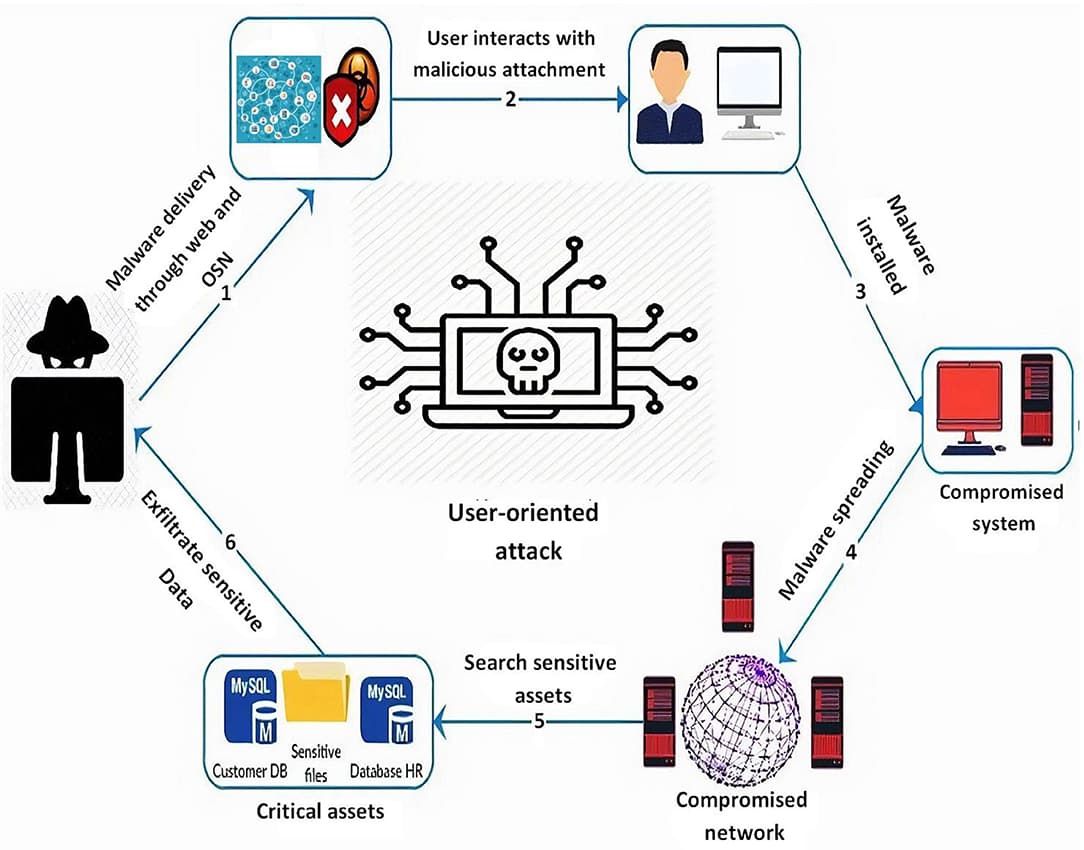
In 2007, Estonia experienced a wave of coordinated cyberattacks that crippled banks, media outlets, and government services.
For a highly digital society, the impact was immediate and widespread.
What it reveals about the future:
- Entire nations can be disrupted without physical invasion
- Digital dependence increases vulnerability
- Cyberattacks can serve as tools of political pressure
This was one of the first clear examples of nation-scale cyberwarfare in action.
What These Incidents Tell Us About the Cyberwarfare Future
Taken together, these cases point to a clear trajectory:
- Cyberwarfare is already operational, not theoretical
- Attacks are becoming more precise, scalable, and covert
- The most effective operations avoid triggering full-scale war
The future won’t introduce entirely new rules—it will amplify what’s already working.
Bottom Line
You don’t need to imagine the future of cyberwarfare. It’s already been tested in fragments.
From Stuxnet’s silent sabotage to SolarWinds’ invisible infiltration and Colonial Pipeline’s real-world disruption, the pattern is clear:
The most powerful attacks are the ones you don’t see—until it’s too late.
And between 2026 and 2055, those attacks will only become more frequent, more sophisticated, and far harder to stop.
Who Are the Major Players in Future Cyberwarfare?
Cyberwarfare isn’t dominated by a single type of actor. That’s what makes it so unpredictable—and dangerous. In the cyberwarfare future, power is distributed across governments, shadow networks, and even private companies. Understanding who’s involved is key to understanding how conflicts will actually unfold.
Nation-States: The Primary Strategic Actors
At the top level, cyberwarfare is still driven by nation-states pursuing geopolitical advantage.
The most advanced players include:
- United States
- China
- Russia
These countries invest heavily in:
- Offensive cyber capabilities
- Cyber espionage programs
- Defensive infrastructure
Their objectives go beyond disruption:
- Intelligence gathering
- Strategic deterrence
- Long-term positioning in global power competition
What’s changing is how they operate. Instead of direct confrontation, they increasingly rely on covert operations, persistent access, and pre-positioning inside critical systems—waiting for the right moment to act.
Non-State Actors: The Rise of Decentralized Power
One of the biggest shifts in cyberwarfare is the growing influence of non-state actors.
These include:
- Hacktivist groups
- Cybercriminal organizations
- Ideologically motivated networks
Unlike traditional warfare, these actors:
- Operate across borders
- Often lack clear attribution
- Can act independently or as proxies
In many cases, governments tolerate, support, or indirectly benefit from these groups, giving them plausible deniability.
This creates a messy reality:
A cyberattack may look like crime—but function as strategy.
Cyber Mercenaries: Warfare as a Service
We’re now seeing the emergence of a new category: private cyber operators for hire.
These groups:
- Sell hacking tools and services
- Conduct surveillance or offensive operations on behalf of clients
- Operate in legal gray zones
This “cyber mercenary” model lowers the barrier to entry even further. Smaller nations—or even wealthy individuals—can access capabilities that were once limited to superpowers.
The result is a marketplace of cyberwarfare, where offensive capabilities are increasingly commoditized.
Big Tech Companies: The Silent Power Brokers
This is where things get uncomfortable.
Major technology companies now control:
- Cloud infrastructure
- Communication platforms
- Critical software ecosystems
That gives them enormous influence over:
- Data flows
- System availability
- Security standards
In future conflicts, these companies may:
- Act as defenders of national infrastructure
- Become targets themselves
- Be forced to choose sides
They are not traditional military actors—but their role is becoming strategically unavoidable.
Intelligence Alliances and Cyber Coalitions
Cyberwarfare is rarely fought alone.
Alliances between countries allow for:
- Intelligence sharing
- Joint cyber operations
- Coordinated defense strategies
Examples include partnerships between Western nations and regional blocs that collaborate on cybersecurity and digital defense.
This creates a layered battlefield where:
- Attacks may involve multiple actors
- Defense is coordinated across borders
- Attribution becomes even more complex
Individuals: The Unexpected Wildcards
In cyberwarfare, a single skilled individual can have outsized impact.
Unlike traditional war:
- You don’t need an army
- You don’t need territory
- You just need access and expertise
This introduces a level of unpredictability that didn’t exist before. Lone actors—or small groups—can:
- Disrupt systems
- Leak sensitive data
- Trigger geopolitical incidents
It’s rare, but when it happens, the consequences can be significant.
The Bigger Picture: A Fragmented Battlefield
The future of cyberwarfare won’t be defined by clear sides.
Instead, it will look like:
- Governments working through proxies
- Criminal groups overlapping with state interests
- Private companies caught in the middle
- Individuals exploiting gaps in the system
This creates a fragmented, multi-layered battlefield where alliances shift, attribution is unclear, and conflict is continuous.
Bottom Line
The key players in the cyberwarfare future are not just nations—they’re networks of influence.
Power no longer comes only from military strength. It comes from:
- Access to systems
- Control over data
- Ability to disrupt at scale
And the uncomfortable truth is this:
The most powerful actor in future cyberwarfare may not be the one with the biggest army—but the one with the deepest access.
The Shift from Physical Battlefields to Digital Frontlines
For centuries, war was defined by geography—armies moved across land, navies controlled seas, and air forces dominated the skies. That model is breaking down. In the cyberwarfare future, the most critical battles won’t be fought over territory, but over networks, systems, and information flows.
From Territory to Systems: What Actually Matters Now
Traditional warfare focused on capturing land or destroying physical assets. But modern societies don’t run on territory alone—they run on interconnected digital systems.
Today, power depends on:
- Energy grids
- Financial networks
- Communication systems
- Data infrastructure
Disrupt those, and you don’t just weaken an opponent—you can paralyze an entire nation without crossing its borders.
This is the core shift:
Control the system, and you control the outcome—no invasion required.
No Frontlines, No Safe Zones
In physical war, frontlines create a separation between combat zones and civilian areas. Cyberwarfare eliminates that distinction.
There are:
- No clear battlefields
- No rear areas
- No truly safe zones
A cyberattack can hit:
- A government ministry
- A hospital
- A private company
- Or millions of individuals at once
Every connected device becomes part of the battlefield. Geography no longer protects you—connectivity exposes you.
Civilian Infrastructure Becomes the Primary Target
One of the most profound changes is who—and what—gets targeted.
Instead of focusing solely on military installations, cyberwarfare targets:
- Power and water systems
- Banking and payment networks
- Telecommunications
- Transportation systems
Why? Because disrupting daily life creates:
- Economic damage
- Public panic
- Political pressure
In many cases, attacking civilian systems is more strategically effective than attacking the military itself.
Speed Replaces Scale
Traditional warfare depends on mass—troops, equipment, logistics. Cyberwarfare depends on speed.
- Attacks unfold in seconds
- Responses must be immediate
- Damage can spread instantly across networks
This compresses the entire decision-making cycle. Leaders may have little time to:
- Verify an attack
- Attribute responsibility
- Decide on retaliation
The risk isn’t just damage—it’s miscalculation under pressure.
Persistent Conflict: War Without Declaration
In the past, wars had clear beginnings and endings. Cyberwarfare operates in a constant gray zone.
Nations are:
- Continuously probing each other’s systems
- Pre-positioning access for future attacks
- Engaging in ongoing digital espionage
This creates a state of permanent competition, where conflict never fully stops—it just fluctuates in intensity.
The concept of “peacetime” becomes increasingly irrelevant.
Blurring the Line Between Military and Civilian Roles
Another major shift is who participates in conflict.
In cyberwarfare:
- Private companies manage critical infrastructure
- Tech firms control communication platforms
- Cybersecurity teams act as frontline defenders
This means the battlefield now includes:
- Engineers
- IT specialists
- Corporate decision-makers
The line between civilian and combatant becomes blurred, complicating both defense and international law.
Strategic Advantage Without Visibility
Perhaps the most unsettling aspect of this shift is invisibility.
In traditional war, destruction is visible. In cyberwarfare:
- Attacks can remain hidden for months
- Damage may only become apparent later
- Attribution is often uncertain
This allows nations to:
- Undermine rivals quietly
- Avoid direct confrontation
- Maintain plausible deniability
It’s conflict without spectacle—but with very real consequences.
Bottom Line
The shift from physical battlefields to digital frontlines is not a future possibility—it’s already happening.
War is no longer defined by where forces are deployed, but by which systems are compromised.
The nations that adapt will focus less on controlling territory and more on:
- Securing infrastructure
- Dominating digital ecosystems
- Maintaining resilience under constant attack
Because in the cyberwarfare future, victory won’t belong to those who hold the ground—
but to those who control the network.
Risks of Escalation: Could Cyberwar Trigger Physical War?
Cyberwarfare is often seen as a “safer” alternative to traditional conflict—less visible, less destructive, and easier to contain. That assumption is dangerously misleading. In reality, the cyberwarfare future carries a serious risk: digital attacks triggering real-world military escalation.
The Attribution Problem: Striking Without Certainty
One of the biggest escalation risks comes from uncertainty.
In cyberwarfare, identifying the attacker is difficult and often slow. Even when intelligence points to a likely source, absolute proof is rare. This creates a volatile situation where:
- A nation may retaliate based on incomplete evidence
- False flags can mislead decision-makers
- Innocent parties could be blamed
Now imagine a major infrastructure failure—power grids down, communications disrupted—and leaders suspect a foreign adversary. The pressure to respond quickly could override the need for certainty.
That’s how miscalculation begins.
Attacks on Critical Infrastructure: Crossing the Red Line
Not all cyberattacks are equal. Some cross into territory that states may treat as acts of war.
Targets like:
- Energy systems
- Water supply
- Healthcare infrastructure
- Financial networks
…are deeply tied to civilian survival and national stability.
If a cyberattack causes:
- Widespread blackouts
- Economic collapse
- Loss of life
…it could trigger a kinetic (physical) response.
At that point, the line between cyberwarfare and conventional war disappears.
Compressed Decision-Making: Minutes to React
Cyberattacks unfold at machine speed. Political and military leaders, however, still operate under human constraints.
This mismatch creates a dangerous dynamic:
- Systems fail rapidly
- Information is incomplete
- Decisions must be made under extreme time pressure
In high-stakes scenarios—especially those involving defense systems—leaders may have only minutes to interpret what’s happening.
That increases the risk of:
- Overreaction
- Misinterpretation
- Escalation based on worst-case assumptions
Nuclear Command and Control: The Ultimate Risk
The most alarming scenario involves cyberattacks on nuclear systems.
Even limited interference with:
- Early warning systems
- Communication networks
- Command and control infrastructure
…could be interpreted as preparation for a nuclear strike.
This creates a terrifying possibility:
A cyber incident could trigger a nuclear response—not because of intent, but because of fear and uncertainty.
In such a scenario, escalation would be rapid and potentially irreversible.
Blurring Intent: Espionage vs. Attack
In cyberwarfare, the line between spying and attacking is thin—and often invisible.
For example:
- Gaining access to a network may be for intelligence gathering
- But that same access could be used later for disruption
The problem is perception.
If one nation discovers another inside its critical systems, it may interpret that presence as:
- Preparation for sabotage
- A prelude to attack
That alone could justify retaliation, even if no damage has occurred yet.
Proxy Actors and Uncontrolled Escalation
Cyberwarfare often involves third parties:
- Hacktivists
- Criminal groups
- State-sponsored proxies
These actors may:
- Act independently
- Escalate beyond intended limits
- Trigger consequences their sponsors didn’t anticipate
A state might tolerate or quietly support a group—only to find itself pulled into a larger conflict when that group crosses a line.
This makes escalation harder to control.
From Gray Zone to Open Conflict
Most cyber operations occur in the “gray zone”—below the threshold of war.
But that threshold isn’t fixed.
It depends on:
- The scale of damage
- The target
- The political context
A series of smaller cyber incidents can gradually build tension, until one event becomes the tipping point.
At that moment, the response may shift from:
- Sanctions and countermeasures
to - Military retaliation
Bottom Line
Cyberwarfare lowers the barrier to conflict—but raises the risk of unintended escalation.
It enables nations to compete constantly without declaring war. But it also creates:
- Ambiguity
- Speed
- Uncertainty
—three ingredients that make escalation more likely, not less.
The uncomfortable truth is this:
Cyberwar may not replace physical war—it may be the spark that ignites it.
And in the cyberwarfare future, the most dangerous conflicts may begin not with an explosion—
but with a system failure no one can immediately explain.
How Nations Are Preparing for the Future of Cyberwarfare
Governments aren’t waiting for the next major cyber conflict to act—they’re already restructuring their military, intelligence, and economic systems around a simple reality: the cyberwarfare future is already here. The preparation isn’t theoretical. It’s active, ongoing, and accelerating.
Building Dedicated Cyber Commands
One of the clearest signals of this shift is the creation of specialized cyber units within national defense structures.
Countries like the United States, China, and Russia have established dedicated cyber commands tasked with:
- Conducting offensive cyber operations
- Defending national infrastructure
- Coordinating cyber strategy across agencies
These units operate alongside traditional military branches, but with a different mandate: fight and win in the digital domain.
In many cases, their activities remain classified—making cyberwarfare one of the least visible, yet most active, areas of modern defense.
Hardening Critical Infrastructure
Nations are increasingly focused on protecting the systems that keep society running.
This includes:
- Energy grids
- Water systems
- Financial networks
- Telecommunications
Governments are investing in:
- Advanced threat detection systems
- Redundancy and backup capabilities
- Rapid response protocols
The goal is not just prevention—but resilience. In the cyberwarfare future, it’s assumed that some attacks will succeed. What matters is how quickly a country can recover.
Public-Private Partnerships: A Necessary Alliance
Here’s the reality most people overlook:
Governments don’t control most of the infrastructure—they depend on private companies.
Tech firms, cloud providers, and telecom operators manage critical systems. That means national security now requires close collaboration between:
- Governments
- Private sector companies
- Cybersecurity firms
This leads to:
- Information sharing agreements
- Joint response strategies
- Coordinated defense exercises
It’s not optional. Without this cooperation, defending against large-scale cyber threats becomes nearly impossible.
Developing Offensive Cyber Capabilities
Defense alone isn’t enough. Nations are also building offensive cyber tools to:
- Deter adversaries
- Preempt threats
- Respond proportionally to attacks
This includes:
- Malware designed for strategic disruption
- Access to foreign networks for future use
- Capabilities to disable infrastructure if needed
The logic is familiar from traditional warfare:
The best defense includes the ability to strike back.
But in cyberwarfare, offensive capabilities are often hidden—making deterrence less visible and more ambiguous.
Cybersecurity Workforce and Talent Development
Technology is only as strong as the people behind it.
Countries are investing heavily in:
- Cybersecurity education programs
- Specialized training for military and intelligence personnel
- Recruitment of top technical talent
Some nations are even:
- Running cyber competitions to identify talent early
- Integrating cyber training into national education systems
The competition isn’t just for power—it’s for skilled human capital.
National Cyber Strategies and Doctrines
Governments are formalizing their approach through national cyber strategies.
These documents define:
- What constitutes a cyberattack
- When a response is justified
- How cyber operations integrate with military strategy
They also address key questions:
- When does a cyberattack trigger a military response?
- How should proportionality be measured?
- What role does cyber play in deterrence?
The challenge is that the rules are still evolving—and not universally agreed upon.
International Cooperation—and Its Limits
Cyber threats are global, so cooperation is increasing between allied nations.
This includes:
- Intelligence sharing
- Joint cyber defense initiatives
- Coordinated responses to major incidents
However, there are limits:
- Competing national interests
- Lack of trust between rival powers
- Absence of enforceable global rules
Unlike nuclear weapons, there is no comprehensive global framework governing cyberwarfare.
Simulations, Drills, and War Gaming
Preparation isn’t just about building systems—it’s about testing them.
Governments are conducting:
- Cyberattack simulations
- Infrastructure stress tests
- Multi-agency response drills
These exercises reveal weaknesses before real adversaries can exploit them.
They also help decision-makers understand:
- How quickly crises escalate
- Where coordination breaks down
- What needs to be improved
Bottom Line
Nations are not treating cyberwarfare as a side issue—it’s becoming a central pillar of national security.
Preparation now focuses on:
- Building capability
- Strengthening resilience
- Maintaining strategic advantage
But here’s the hard truth:
No system is fully secure. The goal is not to prevent all attacks—it’s to survive them.
In the cyberwarfare future, the strongest nations won’t be the ones that never get hit—
but the ones that can absorb, adapt, and respond faster than anyone else.
Can Cyberwarfare Be Controlled or Regulated?
This is the uncomfortable question at the center of the cyberwarfare future: can something so fast, invisible, and globally distributed actually be controlled?
The honest answer is—partially, at best. And even that will be fragile.
Why Cyberwarfare Is So Hard to Regulate
Traditional arms control worked (to a degree) because weapons were:
- Physical
- Observable
- Difficult to hide
Cyber capabilities are the opposite.
They are:
- Intangible (just code)
- Easily concealed
- Constantly evolving
A single vulnerability can be weaponized in secret and deployed globally within seconds. There’s no equivalent of counting missiles or inspecting facilities.
This makes verification—the backbone of any regulation—extremely difficult.
The Attribution Problem Breaks Accountability
Regulation depends on being able to identify violators. Cyberwarfare undermines that from the start.
Because attacks can be:
- Routed through multiple countries
- Disguised as criminal activity
- Launched via proxies
…it becomes hard to prove who is responsible.
Without clear attribution:
- Enforcement becomes weak
- Retaliation becomes uncertain
- Rules lose their deterrent power
You can’t reliably punish what you can’t definitively prove.
No Global Consensus on the Rules
There is currently no universally accepted framework governing cyberwarfare.
Some efforts exist—such as discussions within the United Nations—but they face major obstacles:
- Conflicting national interests
- Different definitions of what constitutes a cyberattack
- Disagreements over sovereignty in cyberspace
For example:
- One country may view data theft as espionage
- Another may view it as an act of war
Without shared definitions, creating enforceable rules becomes nearly impossible.
The Dual-Use Problem: Tools That Blur the Line
Many cyber tools are “dual-use,” meaning they can be used for both legitimate and malicious purposes.
Examples include:
- Network scanning tools
- Encryption-breaking techniques
- Vulnerability research
The same software that helps secure systems can also be used to attack them.
This creates a regulatory dilemma:
How do you ban a weapon that looks identical to a defensive tool?
Unlike chemical or nuclear weapons, there’s no clear boundary.
The Pace of Technology Outruns Policy
Even if agreements are reached, they risk becoming outdated quickly.
Cyberwarfare evolves rapidly:
- New vulnerabilities emerge constantly
- Attack techniques adapt in real time
- Technologies like AI accelerate the cycle
Meanwhile, international policy moves slowly.
By the time rules are negotiated and implemented, the battlefield may have already changed.
What Limited Control Might Look Like
Despite these challenges, partial regulation is possible—and already being explored.
Potential areas of agreement include:
- Protecting critical civilian infrastructure (e.g., hospitals, water systems)
- Banning attacks on nuclear command systems
- Establishing norms against targeting emergency services
These would function less like strict laws and more like shared norms, similar to early rules of war before formal treaties.
They won’t eliminate cyber conflict—but they could reduce its most dangerous consequences.
Deterrence Instead of Control
Because full regulation is unlikely, many nations are focusing on deterrence.
This includes:
- Demonstrating offensive capabilities
- Signaling willingness to respond
- Building resilience to reduce impact
The idea is simple:
If you can’t prevent attacks entirely, make them costly enough to discourage them.
But deterrence in cyberwarfare is less stable than in traditional domains—because capabilities are hidden and attribution is uncertain.
A Fragmented Future: Rules Without Enforcement
The most realistic outcome is a patchwork system:
- Some international agreements
- Regional cooperation
- Informal norms
—but limited enforcement.
Different countries will follow different rules, and powerful actors may ignore them when it suits their interests.
Bottom Line
Cyberwarfare can be shaped—but not fully controlled.
Its defining characteristics—speed, anonymity, and accessibility—work against traditional regulation. The result is a domain where:
- Rules are unclear
- Enforcement is weak
- Violations are frequent
The real goal won’t be to eliminate cyber conflict. It will be to manage its risks and prevent catastrophic escalation.
Because in the cyberwarfare future, the question isn’t whether cyberwar will happen—
it’s whether we can keep it from spiraling into something far worse.
What This Means for the Future of Global Conflict
If cyberwarfare becomes the dominant layer of competition, then the nature of global conflict doesn’t just evolve—it fundamentally reshapes itself. The period from 2026 to 2055 will not be defined by large-scale wars between superpowers, but by continuous, multi-domain pressure where cyber operations sit at the center.
Cyberwarfare as the First Strike Domain
In future conflicts, cyber operations will almost always come first.
Before any physical escalation, nations will attempt to:
- Disrupt communications
- Blind surveillance systems
- Undermine command and control
The goal is simple: weaken the opponent before they can respond.
This means wars may effectively begin long before they are publicly recognized. By the time physical conflict starts—if it ever does—the outcome may already be shaped by earlier cyber operations.
The Rise of Hybrid Warfare
The future isn’t “cyber vs traditional”—it’s everything combined.
Cyberwarfare will operate alongside:
- Economic pressure (sanctions, financial disruption)
- Information warfare (propaganda, disinformation)
- Technological competition (AI, space systems)
This creates hybrid conflicts, where multiple tools are used simultaneously to achieve strategic goals without triggering full-scale war.
The result is a more complex and persistent form of conflict that is harder to detect, define, and respond to.
Fewer Declared Wars, More Continuous Conflict
The traditional model of war—clear start, clear end—is fading.
Instead, we’re moving toward:
- Ongoing cyber operations
- Periodic escalations
- Persistent geopolitical tension
In this environment:
- Peace becomes relative, not absolute
- Conflict becomes normalized
- Engagement happens below the threshold of war
This favors nations that can sustain long-term strategic pressure rather than short bursts of military force.
Power Shifts Toward Technological Superiority
Military strength will still matter—but it won’t be enough.
Future power will depend increasingly on:
- Cyber capabilities
- Control over digital infrastructure
- Leadership in emerging technologies
Countries that dominate in these areas will gain:
- Intelligence advantages
- Faster decision-making
- Greater resilience
This shifts global competition toward innovation ecosystems, not just military budgets.
Civilian Life Becomes the Battleground
One of the most significant implications is where conflict is felt.
In traditional war, civilians are affected—but not always directly targeted. In cyberwarfare:
- Everyday systems are primary targets
- Disruptions are immediate and visible
- Economic and social stability are directly impacted
This means future conflicts will be experienced not just on battlefields, but in:
- Banking apps
- Power availability
- Internet access
- Supply chains
The battlefield moves into daily life.
Deterrence Becomes More Complex—and Less Stable
In nuclear and conventional warfare, deterrence is based on visible capabilities and clear consequences.
Cyberwarfare complicates this:
- Capabilities are hidden
- Attribution is uncertain
- Responses are difficult to calibrate
This makes deterrence:
- Less predictable
- More prone to miscalculation
- Harder to communicate
As a result, the risk of unintended escalation increases—even in a system designed to avoid open war.
Resilience Becomes a Core National Strategy
Because preventing all cyberattacks is impossible, nations will shift focus toward resilience.
This includes:
- Rapid recovery systems
- Redundant infrastructure
- Adaptive response mechanisms
The objective changes from:
- “Stop every attack”
to - “Keep functioning despite attacks”
In the cyberwarfare future, resilience becomes a form of strength equal to offensive capability.
Bottom Line
Cyberwarfare doesn’t replace traditional conflict—it redefines how it unfolds.
Global conflict between 2026 and 2055 will be:
- Less visible
- More continuous
- More integrated into everyday life
The most decisive battles won’t always involve troops or weapons. They will involve:
- Disrupting systems
- Controlling information
- Shaping outcomes before conflict is even declared
And that leads to a hard conclusion:
The future of global conflict won’t be defined by who wins wars—
but by who can continuously compete, disrupt, and adapt without ever needing to declare one.
Conclusion: The War You Won’t See—but Will Feel
The defining conflicts of the next 30 years won’t arrive with sirens, headlines, or formal declarations of war. They will unfold quietly—inside networks, across systems, and through the digital infrastructure that modern life depends on. This is the reality of the cyberwarfare future: a form of conflict that is constant, invisible, and deeply personal.
You won’t see the battlefield—but you’ll feel it when:
- Payments stop working
- Power grids fail
- Information can’t be trusted
- Essential services are disrupted
Cyberwarfare doesn’t need destruction to be effective. It needs disruption, confusion, and strategic pressure applied over time.
And that’s what makes it so powerful.
Between 2026 and 2055, the nations that succeed won’t necessarily be those with the strongest militaries—but those that can:
- Protect their systems
- Adapt under pressure
- Recover faster than their adversaries
Because in this new era, victory isn’t about winning a single निर्ण decisive battle—it’s about maintaining stability while everything around you is being tested.
The war of the future won’t be announced.
It will be experienced—quietly, continuously, and everywhere.
→ Also read: AI Is Changing War Forever — And Humans Are Losing Control
→ Also read: New Global Alliances: How the World Is Splitting Apart
→ Also read: Are We Already in World War III?
→ Also explore: Podcast: Cyberwarfare — The Invisible Battlefield of Future Global Conflicts
→ Also explore: How Quantum Computing Could Expose Your Private Data
Frequently Asked Questions About Cyberwarfare
What is cyberwarfare and how does it work?
Cyberwarfare involves the use of digital attacks to disrupt, damage, or destroy an adversary’s information systems, infrastructure, or military capabilities. It includes hacking government networks, disrupting power grids, stealing classified data, and deploying malware to sabotage critical systems.
Which countries are the most dangerous cyber powers?
The United States, China, Russia, and Israel are widely considered the most capable cyber powers. The US and UK have offensive cyber capabilities deployed through agencies like the NSA and GCHQ. China’s APT groups conduct widespread espionage. Russia has used destructive cyber attacks in Ukraine and Estonia.
Has there been a major cyberwarfare attack already?
Yes. The Stuxnet worm (2010) destroyed Iranian centrifuges in what is considered the first major state-sponsored cyberattack. Russia’s attacks on Ukraine’s power grid (2015–16), the SolarWinds hack (2020), and ongoing attacks on Ukrainian infrastructure during the 2022 war are prominent examples.
How can cyberwarfare affect ordinary people?
Cyberattacks on hospitals, power grids, water systems, and financial networks directly affect civilians. The 2017 WannaCry ransomware attack disrupted the UK’s NHS, delaying medical care. A major attack on financial infrastructure could freeze banking systems, affecting everyone’s access to money and services.
📚 Part of our complete guide: Geopolitics & Global Power: The Complete Guide (2026)
Sources & Further Reading
- Uppsala Conflict Data Program — Datasets — the standard dataset on organised violence and armed conflict.
- Council on Foreign Relations — Global Conflict Tracker — interactive mapping of active conflicts and their strategic stakes.
- Our World in Data — War and Peace — long-run data on armed conflict and battle deaths.
- Chatham House — Geopolitics — independent research on shifting global power.
Weekly Geopolitical Briefing
Go Beyond the Headlines
Analysis of the forces shaping the world - delivered every week. No noise, no bias, just depth.
Subscribe Free ?No spam. Unsubscribe anytime.

About the Author
António Monteiro
Engineer by profession, geopolitical analyst by conviction. I believe responsibility for the planet's future doesn't belong only to governments and institutions - it belongs to all of us. Knowledge about geopolitics, international conflicts, and the forces shaping the world is the most powerful tool for becoming more conscious, informed citizens. You don't need to be a diplomat to understand what's at stake - you just need to want to go beyond the headlines. At Outside The Case, I analyze conflicts, power dynamics, and global trends with rigor and accessible language, so you can understand what's really happening in the world.
Read more about the author →